

Fire Detection Systems
Fire detection systems are safety systems that help protect life and property by detecting fire hazards that may occur in facilities at an early stage, keeping the fire under control before it grows, and minimizing potential damages. Permanently established, these systems can operate on the principle of detecting heat, smoke, flame, or flammable gases, and can be designed manually and/or automatically depending on needs.
Detectors used in fire detection systems send a signal to the fire alarm control panel when they detect fire signs occurring in the environment. This information, evaluated by the control panel, can be transmitted to fire safety units and, depending on system design, to automatic fire suppression systems. Thus, the goal is to intervene in the fire at the earliest possible stage. After the fire is terminated, the system can be recommissioned quickly and easily following necessary checks.
How Do Fire Detection Systems Work?
The primary purpose of fire detection systems is to detect the initial signs of a fire and timely warn relevant individuals and security systems. Depending on the characteristics of the system used, detection can be carried out via smoke, heat, flame, or gas.
The detector or field equipment performing the detection sends information to the fire alarm control panel. While information is evaluated on a zone basis in conventional systems, it can be determined address-point-specifically in addressable systems which detector gave the alarm. Depending on system structure, alarm sirens, security units, and automatic suppression systems can be activated.
Conventional Fire Detection Systems
Conventional fire alarm systems are fire detection solutions that have been used for many years and are preferred especially in small areas and applications with budget constraints. In a typical conventional fire alarm system, the fire alarm control panel operates alarm sirens by evaluating signals coming from call points and conventional detectors.
Conventional detectors are connected to the fire alarm control panel with a zone logic. Detectors are basically evaluated in normal and alarm states. When any detector detects a fire, a signal is sent to the control panel via the relevant zone. Detection systems used particularly in gas suppression systems can also be designed as conventional depending on the application.
Addressable Fire Detection Systems
Addressable fire detection systems offer a more advanced detection and monitoring structure compared to conventional systems. In these systems, every detection element has its own unique address. Continuous communication is established between the fire alarm panel and field equipment, transmitting the status of each element to the control panel.
Thanks to addressable systems, the exact detector or equipment from which the alarm originated can be pinpointed. Smart fire alarm systems can be programmed according to the characteristics of the area to be protected. Additionally, receiving information from different systems and controlling various equipment through monitoring and control modules becomes possible.
Aspirating Smoke Detection Systems
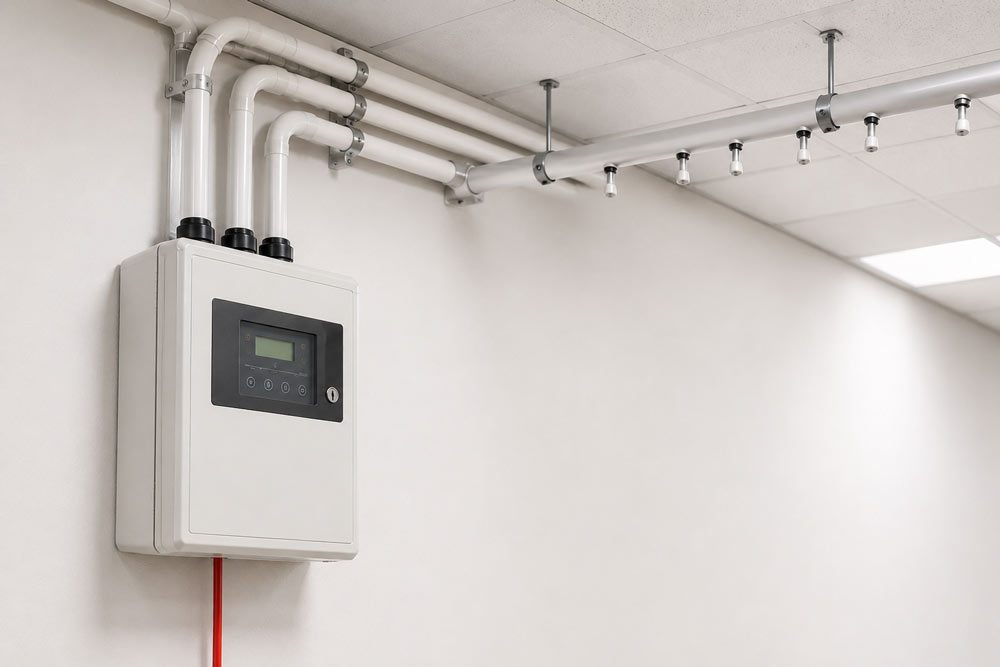
Aspirating smoke detection systems are systems used for the early and sensitive detection of smoke formed during a fire. The system basically consists of a detector, air sampling pipes, and air sampling holes.
The fan inside the detector draws the air present in the protected space into the system via sampling holes. As a result of the evaluation made inside the detector, the presence and quantity of smoke in the air are determined. Depending on the application, the system can first provide preliminary information and generate a fire alarm signal as the smoke level increases.
Aspirating systems can be used especially in telecommunication centers, cold rooms, high-ceilinged areas, and spaces where standard detectors cannot be appropriately mounted.
Gas Detectors

Gas detectors are used for the early detection of fire and/or explosion risks in environments where flammable and explosive gases may leak. The appropriate detector type is determined according to the type of gas and the application area.
Gas detectors transmit a signal to the relevant electronic control panel by detecting gas leaks occurring in the environment. Depending on system features and design, the control panel can send commands to execute necessary safety functions, such as closing the gas shut-off valve.
Flame Detectors
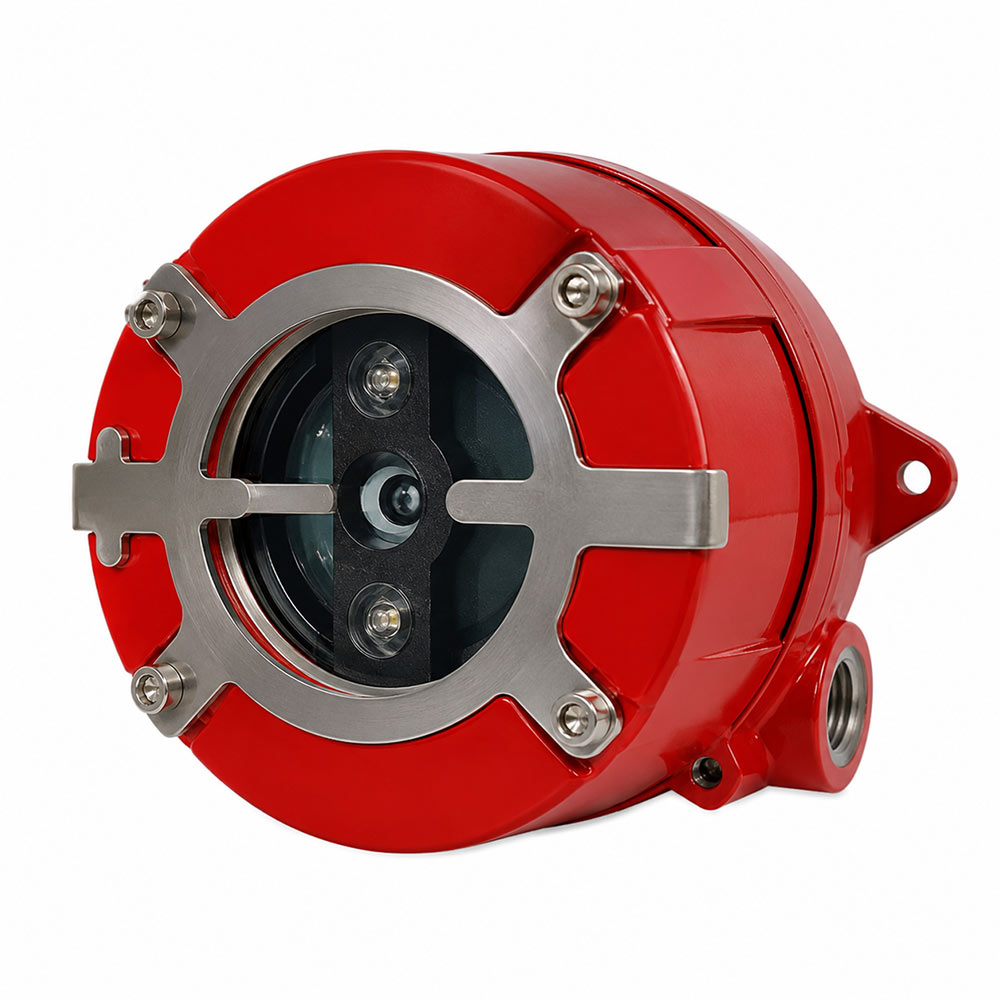
Flame detectors are rapid detection equipment used in facilities where fires can develop very quickly and the risk of loss of life and property is high. They can be preferred particularly in applications such as oil and gas pipelines, turbines, offshore platforms, automotive factories, nuclear facilities, and hydrogen filling stations.
Flame detectors operate on an optical principle. Fire is detected by sensing radiation and wavelengths of different characteristics present in the flames of combustible materials. Depending on the technology used, flame detectors featuring IR, UV, or UV/IR can be found.
Linear Heat Detection Cables
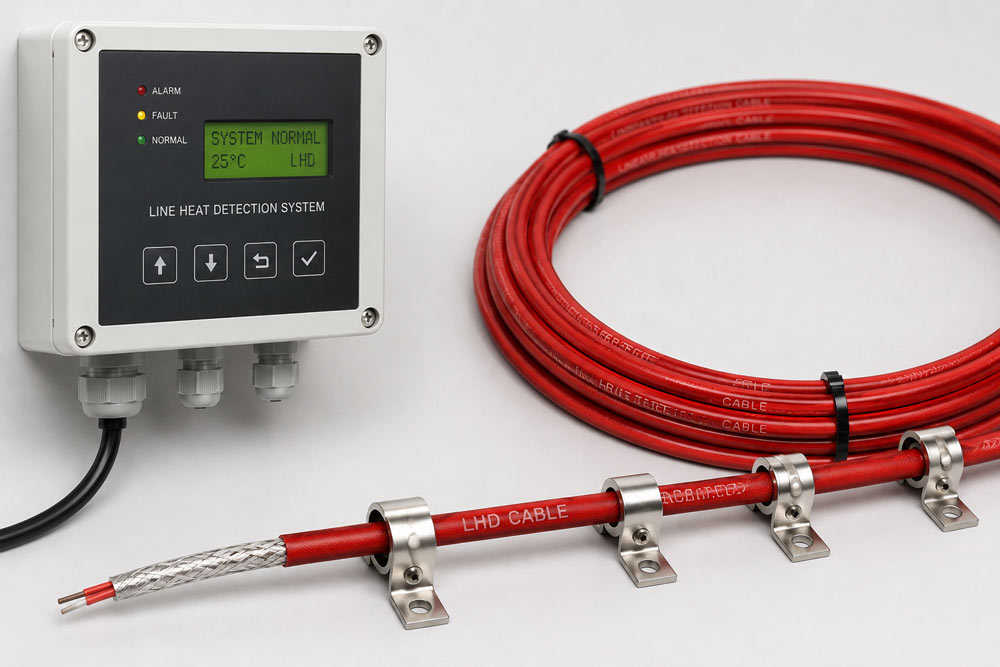
Linear heat detection (LHD) cables are systems formed by point-type heat detection elements continuously present inside a secure cable. They can be preferred especially in indoor and outdoor high-hazard spaces where standard detectors are difficult to use or maintain.
Linear heat detection systems can be used in areas with harsh environmental conditions such as dirt, dust, corrosion, high humidity, extreme temperature fluctuations, solvent vapor, and radioactivity. Furthermore, they can offer solutions suitable for applications in ATEX-classified facilities. They have different types, including analog and digital linear heat detectors.
AY-SO Technical Fire Detection System Solutions
As AY-SO Technical, we supply fire detection systems and equipment tailored to the needs of different facilities and applications. We offer solutions to determine appropriate equipment based on the characteristics of the application area, detection needs, and system structure.
- Addressable fire detection systems
- Conventional fire detection systems
- Active air-sampling highly sensitive smoke detection systems
- Sensitive aspirating smoke detection systems
- Sensitive aspirating gas detection systems
- Beam-type smoke detectors
- Flame and spark detectors
- Linear heat detection cables
- Fiber-optic heat detection detectors
- Emergency public address and sirens
- High-powered monstrous sirens
- Graphic monitoring software
- Ex-proof or intrinsically safe devices for potentially explosive zones
- Gas detection detectors
How Is Fire Detection System Selection Made?
Fire detection system selection is made by considering the size of the area to be protected, purpose of use, ambient conditions, fire risk, ceiling height, type of fire that needs to be detected, and the facility's existing security systems. While conventional systems can be preferred in small spaces, addressable systems can be used in applications requiring more comprehensive and point-specific information.
Aspirating systems can be evaluated in high-ceilinged areas or spaces where standard detectors are unsuitable for mounting, and flame detectors or linear heat detection systems can be evaluated in facilities with fast-developing fire risks.