

Commercial Kitchen Hood Fire Suppression Systems
Automatic Fire Suppression Solutions for Professional Kitchens.
What Are Commercial Kitchen Hood Fire Suppression Systems?
Kitchen hood fire suppression systems are fixed fire suppression systems used to automatically intervene in fires that may occur in cooking units, hoods, plenums, and associated exhaust ducts in professional kitchens. Since cooking equipment operating at high temperatures and cooking oils in kitchens can increase the fire risk, it is of great importance that fires are detected at an initial stage and intervened with an appropriate extinguishing agent.
An important characteristic of kitchen fires is that they may not remain confined to the cooking appliance alone. Oil vapors and deposits formed during cooking can create a risk that may cause the fire to progress inside the hood and exhaust system. Therefore, protection must be planned not only for the visible cooking surface but also for the hood and related exhaust sections.
Why Are Kitchen Fires Dangerous?
Kitchen fires are among the most dangerous types of fires. A fire starting in any cooking unit or chimney can rapidly spread through air ducts to the entire building or restaurant. The failure of a business to continue operations following a major fire can yield severe consequences not only in terms of property and equipment losses, but also regarding the business's customers and reputation.
In cooking oil fires, the extreme rise in temperature following ignition makes intervention more specialized. Oil fires can occur due to highly flammable oil vapors. Therefore, cutting off the burning surface's contact with oxygen and lowering the oil temperature are among the primary objectives in bringing the fire under control.
How Do Commercial Kitchen Hood Fire Suppression Systems Work?
Automatic suppression systems containing a liquid chemical type extinguishing agent can be used to extinguish fires in kitchen cooking units and hoods. The extinguishing liquid is mounted inside a cylinder near the kitchen hood unit. The extinguishing liquid is sprayed during a fire via nozzles properly positioned toward the cooking units, hood, and necessary duct areas.
The special extinguishing liquid covering the surface helps cut off the burning surface's contact with oxygen and ensures the fire is brought under control through its cooling effect. Wet chemical systems used in commercial kitchen applications are engineered to collectively protect the protected cooking devices along with the hood, plenum, and associated duct sections in accordance with system design.
Fire detection can be achieved using mechanical detection elements depending on system design and the equipment used. As specified in the system information provided, fusible metal detectors located on a wire line mechanically connected to the cylinder head can trigger the system when a specific temperature is reached. The system can be automatically activated in a completely mechanical manner. If desired, information regarding system activation can be transmitted to the fire alarm system.
Protection Zones of Commercial Kitchen Hood Fire Suppression Systems
In kitchen hood fire suppression systems, the protection zone is not limited solely to the hood surface. Depending on the system design, cooking equipment, the kitchen hood plenum section, and related exhaust ducts are evaluated together. Which sections will be protected is determined by considering the structure of the kitchen, the type and layout of cooking equipment, the size of the hood, the number of chimneys, and the manufacturer design criteria of the system used.
- Cooking units
- Kitchen hoods
- Hood plenums
- Duct sections connected to the hood and exhaust system
- Detection zones specified above cooking equipment and within system design
Areas of Application for Kitchen Hood Fire Suppression Systems
 Mall Restaurants
 Cafes
 Catering Companies
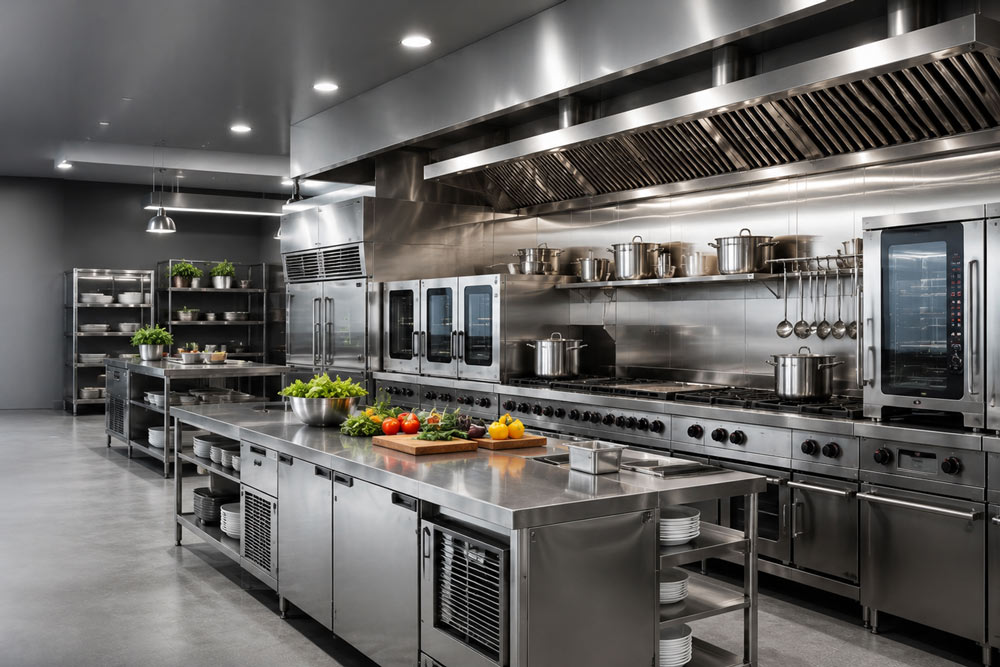 Industrial Kitchens
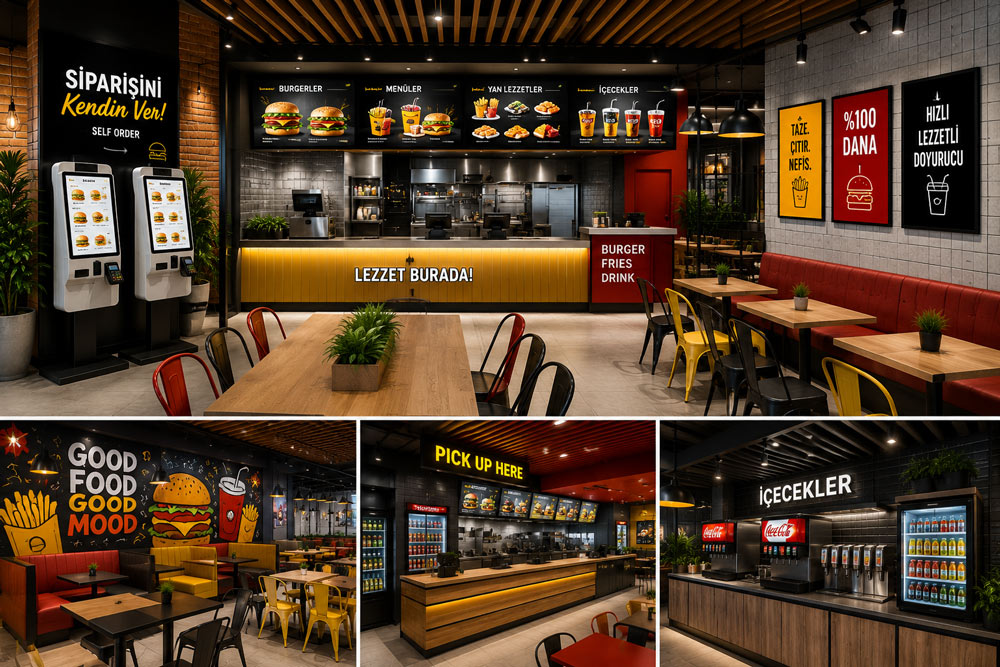 Fast Food Restaurants
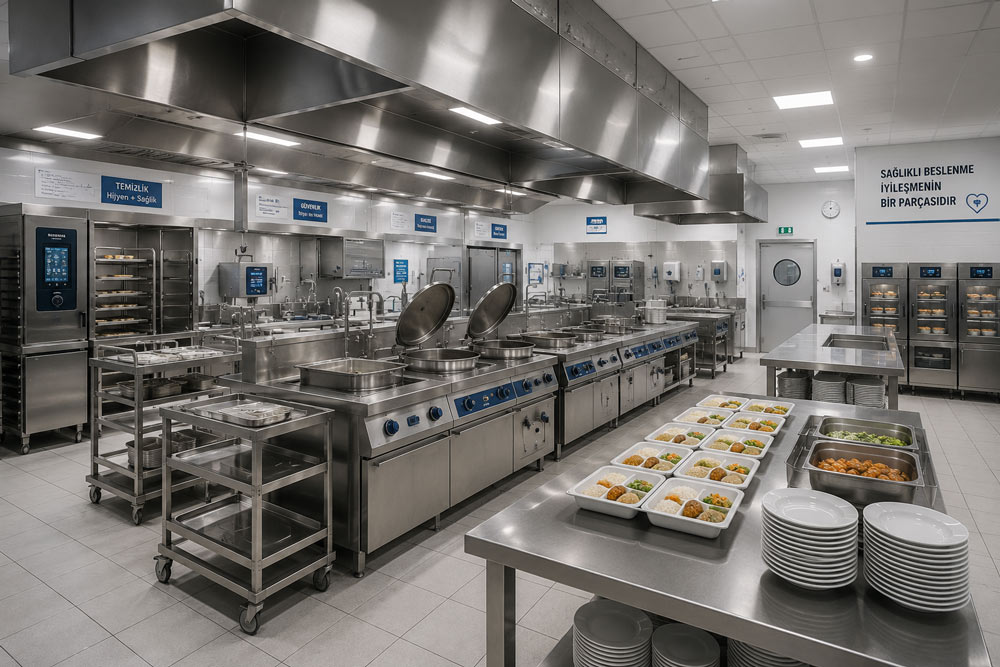 Hospital Kitchens
 Hotels
 Restaurants
 University Kitchens
Kitchen Hood Fire Suppression System Design
The primary criteria in system design are hood plenum size, number of chimneys, and the types, quantities, and sizes of cooking units. The required extinguishing liquid quantity and spray pattern for each cooking unit type and size may vary. Accordingly, the nozzle type to be used and nozzle placement are also determined based on system design.
The relative positions of cooking units to the hood and chimney sections are also taken into account in system design. In areas where a fire has the potential to progress from one zone to another, the protection scope is evaluated collectively according to system design.
Nozzle Placement and Extinguishing Liquid Quantity
The extinguishing liquid quantity, spray pattern, and associated nozzle type required for each cooking unit type and size are different. Therefore, merely placing nozzles at a visually appropriate point is not sufficient; they must be positioned in accordance with the system design criteria and the manufacturer instructions of the system used.
The minimum extinguishing liquid quantity needed by the system in the event of a fire is determined by considering the equipment and hood system within the protection scope. An appropriate cylinder is selected based on this quantity, and then the piping design of the system is carried out.
How Does the System Activate During a Fire?
In the event of a fire occurring in cooking units or hood chimneys, extinguishing liquid is discharged from the nozzles belonging to the protected areas according to system design. In the system architecture provided by the user, it is envisioned that liquid is discharged across the entire system from all nozzles if a fire occurs.
The system can be automatically activated through the triggering of the mechanical detection element. When desired, information that the system has activated can be transmitted to the fire alarm system. Thus, alarm information regarding the operation of the suppression system can be integrated into the building fire alarm infrastructure.
Hood, Plenum, and Duct Protection
Plenums and exhaust ducts are also sections that must be considered in kitchen hood fire safety. The accumulation of oil and oil vapors generated during cooking within the hood system can pose a risk in terms of fire progression along the duct system. Therefore, the characteristics of the hood and related duct sections must be evaluated in protection design.
It is stated under NFPA 17A that wet chemical suppression systems used in commercial cooking operations can protect restaurant, commercial, and institutional hoods along with plenums, ducts, and associated cooking appliances. NFPA 17A also stipulates that NFPA 96 and the manufacturer's design, installation, and maintenance instructions must be taken into account in system applications.
Standards and Engineering in Kitchen Hood Fire Suppression Systems
It is important that the system to be used in the design of commercial kitchen fire suppression systems is a listed system meeting relevant application requirements. NFPA 17A references standards such as ANSI/CAN/UL/ULC 1254 for wet chemical systems intended for the protection of commercial cooking equipment and ANSI/CAN/UL/ULC 300 for fire tests intended for the protection of commercial cooking equipment. Relevant local regulations, fire safety requirements, and manufacturer instructions must also be evaluated in projects and applications.
Maintenance, Inspection, and Keeping the System Ready
To ensure automatic kitchen hood fire suppression systems operate as expected during a fire, it is important that the system is inspected following installation according to manufacturer instructions and applicable maintenance requirements. The suppression system must be evaluated together with detection elements, cylinders, piping, nozzles, and other system components.
Periodic inspection, testing, and maintenance practices are crucial for the reliability of commercial kitchen fire suppression systems. NFPA resources contain provisions regarding subjecting fire suppression equipment used in commercial cooking operations to inspection, testing, and maintenance within the scope of NFPA 96.
Advantages of Kitchen Hood Fire Suppression Systems
- Helps automatically detect and intervene in fires at their initial stage.
- Provides a fixed suppression solution aimed at protecting cooking units.
- Ensures the hood and associated exhaust zones are protected according to system design.
- Allows the extinguishing liquid to be applied to targeted areas via special nozzles.
- Allows system activation status to be transmitted to the fire alarm system when desired.
- Provides an integrated protection approach against the risk of kitchen fires spreading through air ducts.
Points to Consider When Choosing a Kitchen Hood Fire Suppression System
- Hood plenum size must be determined.
- Number of chimneys and connections must be evaluated.
- Types of cooking units must be determined.
- Quantities and sizes of cooking units must be taken into account.
- Required extinguishing liquid quantity for each equipment must be determined.
- Spray pattern and appropriate nozzle type must be determined.
- Nozzle placement must be done in accordance with system design.
- Cylinder selection must be made based on the minimum required extinguishing liquid quantity.
- Piping design must be carried out according to the selected cylinder and system design.
- Integration needs with the fire alarm system must be evaluated.
- Installation, testing, and maintenance procedures must be performed according to manufacturer instructions and applicable regulations.